
The draft of the training program designed to introduce the CogniPlay methodology has been completed. This autumn, a five‑session internal pilot training will be launched, in which participants will learn the core logic of CogniPlay, gain firsthand experience of how it works, and practice designing simple game‑based learning situations. The program also demonstrates how to use the curriculum, the game bank, and the available professional support.
Author Archives: zeno
Gifted Education International – Publication
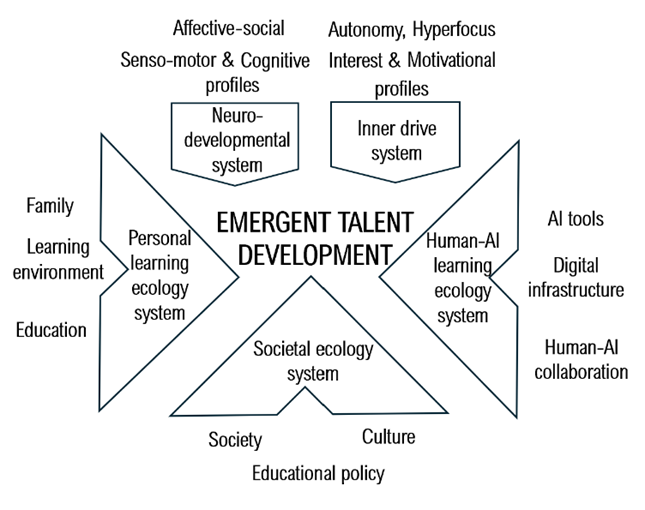
Gyarmathy Éva’s study, “Beyond Identification: A Neurodiversity-Based Developmental Framework for Gifted Education in the Age of Artificial Intelligence,” will appear in the prestigious journal “Gifted Education International”. The article emphasizes that in the age of AI, gifted education is shifting from identifying students to transforming learning environments. It argues for dynamic, profile‑based systems that support cognitive diversity and intrinsic motivation. The “Neurodiversity‑Based Developmental Profiling Framework” therefore views the creation of flexible, personalized, AI‑integrated learning ecosystems as the primary condition for talent development. This model represents one of the outcomes of the research group’s work on transforming learning environments, and its principles are also reflected in the CogniPlay system.
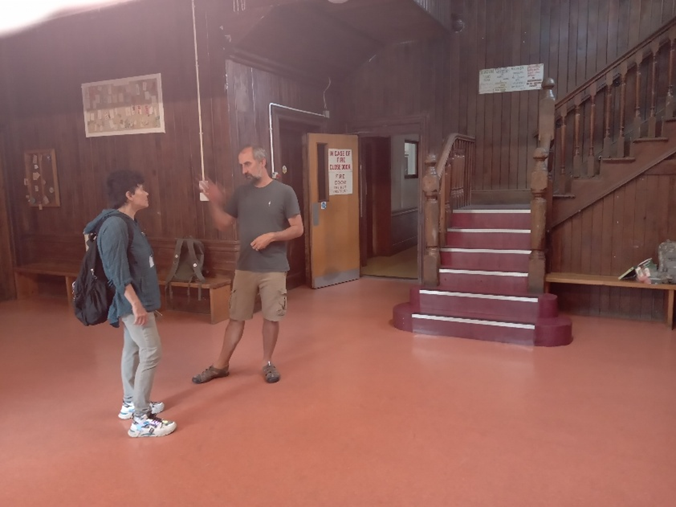
Extreme Learning Environment – Summerhill School
Éva Gyarmathy received an invitation from the leaders of Summerhill School, founded 100 years ago by Alexander Neill and still operating according to his original principles. The school continues to follow the practices established at its founding almost unchanged. It has been able to adapt even to the rapid transformations of the 21st century because it tailors the learning environment to the needs of the children. However, it is currently less able to respond to challenges related to neurodiversity. A conversation with Deputy Head Henry Readhead revealed that while the school’s learning environment provides an adequate response for autism and ADHD, the management of learning difficulties does not yet fit comfortably within its free‑learning philosophy.
To explore this issue further, we are developing a joint research project.
Workshop Conference
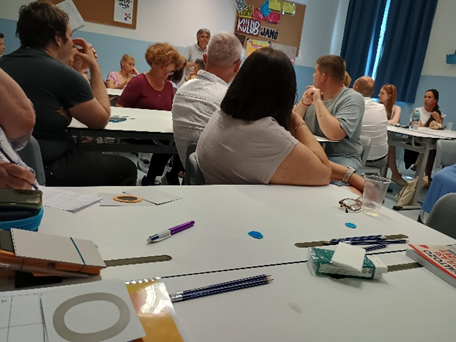
In preparation for the experimental launch of CogniPlay‑based education in the 2026–2027 school year, preliminary meetings have begun at the request of participating schools. The first meeting was held on 22 June 2026 from 13:00 to 16:00.
Location: As a result of preparatory discussions with Director György Láng, the meeting took place at the ELTE Radnóti Miklós Practice Primary and Secondary School, where the evaluation of the methodology has also begun.
CogniPlay Research Groups at Apor
The MTA–AVKF Learning Environment Research Group is being expanded with the college instructors’ domain‑specific research teams. At the online meeting held on June 8, the CogniPlay working group, organized by Ágota Buzogány, decided to translate the CogniPlay methodology into scientifically grounded professional materials that can be transferred into teaching practice.

CogniPlay Section at the Lumen Educationis Conference
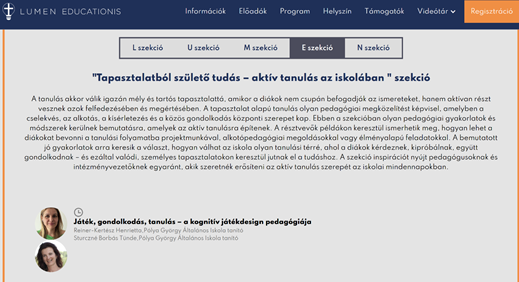
As part of the Lumen Educationis – Catholic Educational Innovation Conference (Budapest, 19 May 2026), we organized a dedicated section. In addition to the presentations, participants were able to gain first‑hand experience in a CogniPlay session led by children from Tatabánya.
Testing the PlayAbility Profile Test
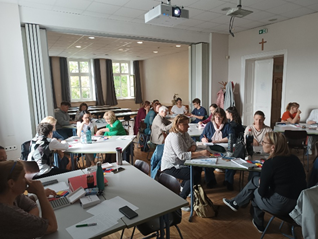
Today, CogniPlay was presented at the professional workshop of the Neurodiversity Methodology Centre. The participants included various professionals as well as students.
They were able to try the PlayAbility test in practice and also gain first‑hand experience with the CogniPlay method. The “logic buttons,” which will become part of the methodology’s toolkit, were also introduced.

Professional Consultation on the Comparative Analysis of the Chess Palace and CogniPlay Pedagogical Systems
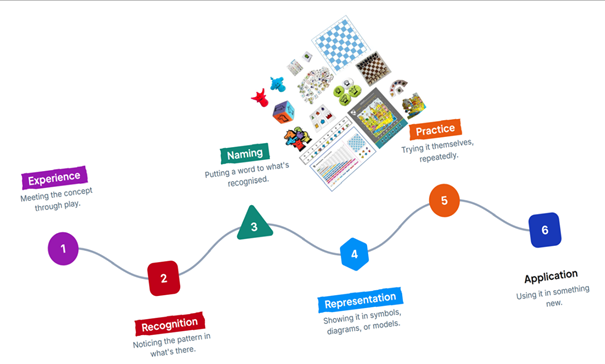
A professional meeting was held to prepare the comparative analysis of the Chess Palace and CogniPlay pedagogical systems. The two approaches share a common foundation: playful learning, the development of rule‑based thinking, the support of children’s active engagement, and the emphasis on the teacher’s role as a reflective guide.
During the discussion, we reviewed the differing system logics of the two frameworks. While Chess Palace offers a coherent, chess‑based learning universe, CogniPlay represents an open, conceptual, and adaptive educational architecture capable of integrating a wide variety of games and learning situations into a unified system. The two methodologies are highly compatible, and their strengths can mutually reinforce one another.
Testing the PlayAbility Profile Test
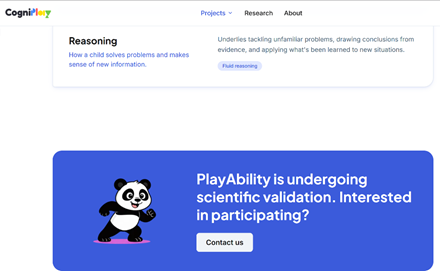
Testing of the first module of PlayAbility can now begin in Hungary as well. The test can be used on a tablet, but for now it is certified for only one type of device, which limits testing possibilities. We will soon optimize the test for various tablets. More information: https://cogniplay.com/en/assessment/
Book Launch – Changing Learning Environment
At the online professional workshop of the Neurodiversity Methodological Centre, the research group’s methodological publication was presented. The book Changing Learning Environment generated significant interest, as it introduces ways in which the methodologies used during the research can be applied and adapted in practice, offering possibilities that can be integrated into teaching.