Author Archives: zeno

The Review Committee did not approve the professional report documenting our research group’s four years of research activity

On November 21, the Program Secretary communicated via email the rejection of the professional report. Since that time, however, no detailed or official evaluation has been provided. Consequently, albeit belatedly, we present here the text of the email together with the response of Éva Gyarmathy, head of the research group. The rejection:

Dear Research Group Leader, Dear Éva,

On November 20, the Review Committee evaluated the professional reports submitted under the MTA Public Education Development Research Grant. Unfortunately, based on the final report of the MTA–AVKF Learning Environment Research Group, the minimum publication requirements were not met; therefore, the Committee did not accept the final professional report.

The Committee’s unanimous decision is that, should the research group remedy the deficiencies by September 30, 2026, the professional report will be re-evaluated one year later. If the deficiencies are not remedied, the amount of the final year’s funding must be repaid to the MTA. The head of the host research institution will also be notified of the Committee’s decision.

Furthermore, at the Committee’s recommendation, the research group’s presentation has been removed from the December 3 event.

We kindly request that you take note of the above and submit the supplementary report by the specified deadline

We did not receive any further information; therefore, on November 27, Éva Gyarmathy sent the following response:

Dear Éva Sugár (Secretary), László Bozó (Chair), and Krisztián Józsa (Co-Chair),

It is my assumption that the message conveyed in the email we received from you does not constitute an official communication. To date, the formal review issued by the Review Committee has not arrived, and therefore I can only respond without knowledge of the specific details.

The opinion of the Review Committee is important to us, and naturally the Committee may decide that our work does not meet the required standards. At the same time, I must emphasize that, according to the call for proposals, our research and financial plan, and the grant agreement (all attached), we have fulfilled all of our obligations. For this reason, the threat of repayment of the funding is incomprehensible.

Throughout the project, we repeatedly received messages about changing conditions—initially promises of rewards, later threats of penalties. However, no contract amendment was ever made. In the absence of such an amendment, we were able to proceed only according to the original research and financial plan. The approved plan did not include publications requiring payment of fees. Our research group prioritized free international and domestic publications. In line with the spirit of the call for proposals, we involved teachers in the research and allocated costs accordingly. Nevertheless, we managed to cover the fee for one expensive Q1 publication, which was successfully published.

If the call for proposals had specified the number of publications requiring significant financial expenditure, we would have developed a completely different research plan and optimized the project for Q1–Q2 publications. Retrospectively, during the course of the research, it was not possible for us to make such substantial changes. On this basis, the threat of repayment of the grant funds by the Review Committee is unfounded, and we request its withdrawal.

Furthermore, it is incomprehensible that, after being invited to present the publication on the methodologies applied during the project, the Review Committee prohibited us from presenting our publication that disseminates the methodology developed in the research. This is despite the fact that it is clearly part of our work and, beyond Q1–Q2 publications, it is our obligation to contribute to the development of Hungarian public education. Our publication has nonetheless appeared, even if its presentation has been denied by the Committee.

Beyond the above, the decision is highly problematic from an educational policy perspective. The procedure of the Review Committee reflects the most characteristic features of the “black pedagogy” prevalent in Hungarian education: narrow, domain-focused evaluation; punishment and exclusion; persecution of diversity; unclear circumstances; and shifting expectations to which one is expected to adapt mid-process.

On behalf of our research group, I request that the procedure of the Review Committee be reconsidered. We expect not only a reconsideration of our own case, but also a fairer evaluation of other similarly penalized research groups, in line with the renewal of perspectives required for the development of Hungarian public education.

We continue to await the professional analysis provided by the Review Committee. It is difficult to conceive that, due to a factor not included in the research plan or the contract, the Review Committee of a program conducted under the auspices of the Hungarian Academy of Sciences would disregard the research group’s entire four years of work.
Publication of our results

On November 13, during our symposium at the National Conference on Educational Sciences in Szeged, our presentations were followed by an engaging professional discussion in the lecture hall. Opponent Nóra Rapos highlighted the interdisciplinarity of our project and the issue of educational innovations, which generated considerable interest among the participants.

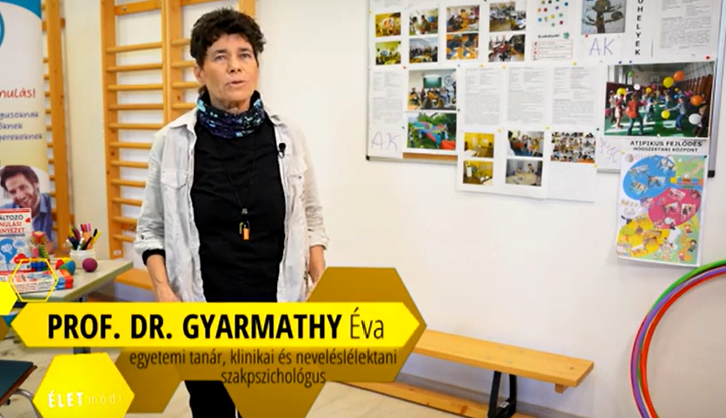
Following the publication of our volume by Móra Publishing House, TV2’s Lifestyle Magazine on November 16 discussed our research and we demonstrated its results in practice.

To introduce the four years of work carried out by our MTA-AVKF research group at Apor Vilmos Catholic College, a press release was issued. As a result, Éva Gyarmathy presented our research in several radio interviews. For example, on November 21, she spoke with Egon Rónai on Spirit FM about the group’s results and their significant aspects for public education.

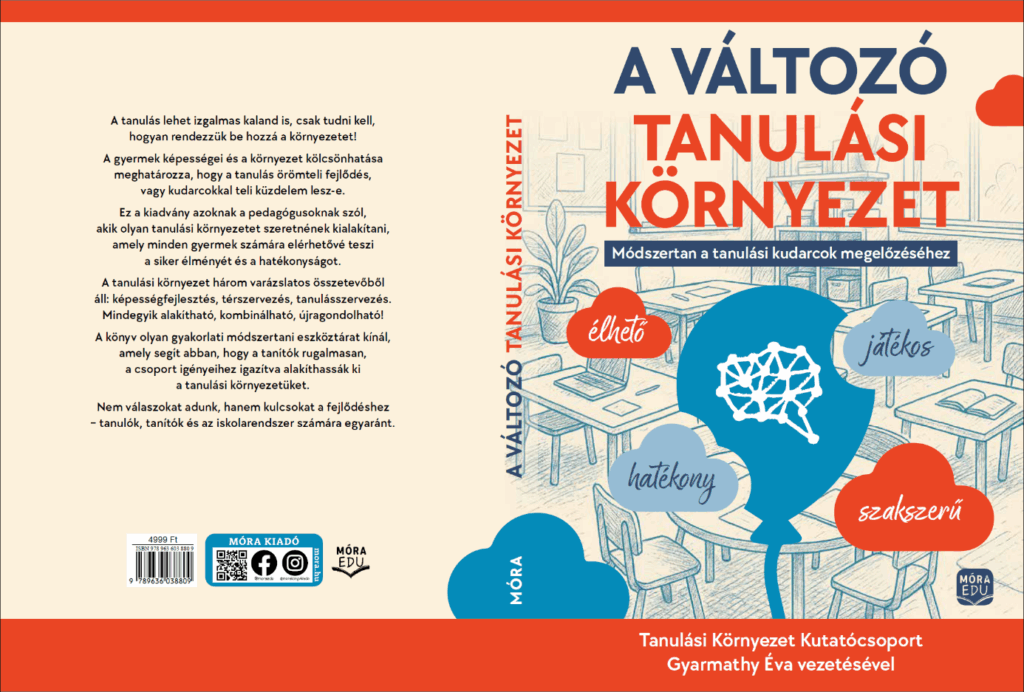
Our methodological publication has been released

The Changing Learning Environment – Methodology for Preventing Learning Failures

Learning can be an exhilarating adventure – when the environment is thoughtfully designed to support it.

The dynamic interplay between a child’s abilities and their surroundings shapes whether learning unfolds as a joyful path of discovery or a frustrating struggle.

This publication is for educators who aspire to create inclusive, responsive learning environments where every child can experience success and thrive.

A truly effective learning space rests on three transformative pillars: skill development, spatial organization, and instructional design. Each element is flexible, interwoven, and open to creative reinvention.

Inside, you’ll find a hands-on methodological toolkit that empowers teachers to adapt their classrooms to the evolving needs of their students.

We don’t offer one-size-fits-all solutions – we offer keys to growth: for learners, for educators, and for the broader educational system.

Conference Session Dedicated to Our Methodological Publication in Vác

On October 15, at the Early Childhood Education Conference in Vác, we will showcase our research-based methodological publication within a dedicated session designed to highlight our practical innovations.

Session title: Methods for Transforming the Learning Environment of Children Starting School
Session chair: Éva Gyarmathy
Session format: Presentations and practical demonstrations

Presenters and topics:

  • Éva Gyarmathy – Learning organization
  • Kata Kádek – Spatial arrangement
  • Anna Négyesi – Movement breaks
  • Bernadett Dézsi – Rhymes and chants
  • Bernadett Mizsei – Letters
  • Judit Pap – Learning cards

Description:
In this session, we will present the methodologies and practical insights developed over four years by the MTA-AVKF Learning Environment Research Group. Our work focuses on transforming the learning environment for first and second grade students through the integration of evidence-based developmental approaches and classroom structures that actively support differentiated, learner-centred teaching.

Participation in the 25th Conference on Educational Sciences

Our symposium proposal submitted for ONK2025 in Szeged has received positive reviews, so we will have the opportunity to present the diverse results of our research on November 13.

Program of our symposium:

Possibilities and Obstacles in Transforming the Learning Environment in First and Second Grade (Chair: Éva Gyarmathy, Opponent: Nóra Rapos)

  • Éva Gyarmathy, Judit Pap, Mónika Turmezei: The Lack of Structured Learning Environments in Lower Primary Education
  • Bernadett Svraka, Éva Gyarmathy: Connections Between Learning Performance and Cognitive Abilities in Differently Designed Learning Environments in Lower Primary Classes
  • Judit Gombás: Teachers (Un)Receptive to Innovation
  • Györgyi Elekes, Bernadett Svraka, Judit Gombás: The Relationship Between Burnout and Mental Well-being Among Hungarian Teachers

CogniPlay – Assess – Play – Evolve

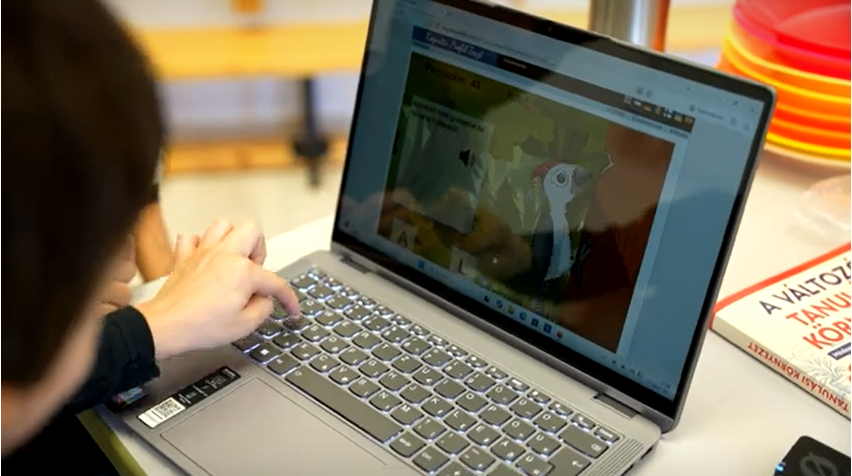
Research findings from the MTA-AVKF research group indicate that developmental games and exercises are not being organically integrated into school learning processes. To move forward, we are enhancing the system of methodological materials by combining them with digital technologies – https://www.cogniplay.com.

CogniPlay, previously introduced here, is a next-generation STEAM model targeting children aged 4–10, where play is the core space for learning – not a supplementary element. It uses carefully designed physical and digital games in a structured way, following a learning arc: Assessment → Play (Understanding and Generalization) → Practice and Measurement → Development. The model aligns with current school structures. Its components – games, task banks, and methodological guides – can be used independently or as a coherent system, allowing gradual implementation (module → topic/unit → grade → school).

The ecosystem is built around interconnected domains: PlayMath (current focus), PlayWord, PlayAbility, PlayAgility, PlayScience, PlayArt, PlayCraft, and PlaySocial. The games intentionally link these domains to build and transfer concepts through action, movement, and social interaction. CogniPlay assesses and, if needed, develops foundational learning skills both before and during the learning process, with teacher oversight and control. Data collected by the system will be made available anonymously to students, parents, educators, and researchers. To ensure quality and sustainable scalability, CogniPlay is seeking institutional partners – primarily teacher training organizations – to establish and operate Regional Methodological Centres.

Our latest publication: Promoting Teacher Adoption of Digital Tools for Assessing Early Learning in Mathematics, Language, and Technology.

We have submitted a manuscript to the Journal of Digital Learning in Teacher Education titled “Promoting Teacher Adoption of a Digital Tool for Early Mathematics, Language, Technology Learning Assessment: Insights from the Sensory Motor and Cognitive Profile Test”. The manuscript ID is UJDL-2025-0112.

The article explores how the advancement of technology has increased teachers’ access to digital tools for education, yet their adoption remains low due to a mismatch between tool design and teachers’ practical needs. Using the SCPT (Sensory Motor and Cognitive Profile Test) as a case study, our research investigates how digital tool uptake can be supported in early education. Findings highlight the need for comprehensive professional support, culturally relevant technological solutions, and clear pedagogical rationale. The study contributes to the development of human-centred, sustainable educational technologies.

Publication of the Research Methodology Materials

The collection of methodological materials used in our research is now print-ready. It will be published at the end of September as a joint release by Móra Publishing and Apor Vilmos Catholic College. The volume will be presented at the Early Childhood Education Conference in Vác this October.

We received a special publishing opportunity

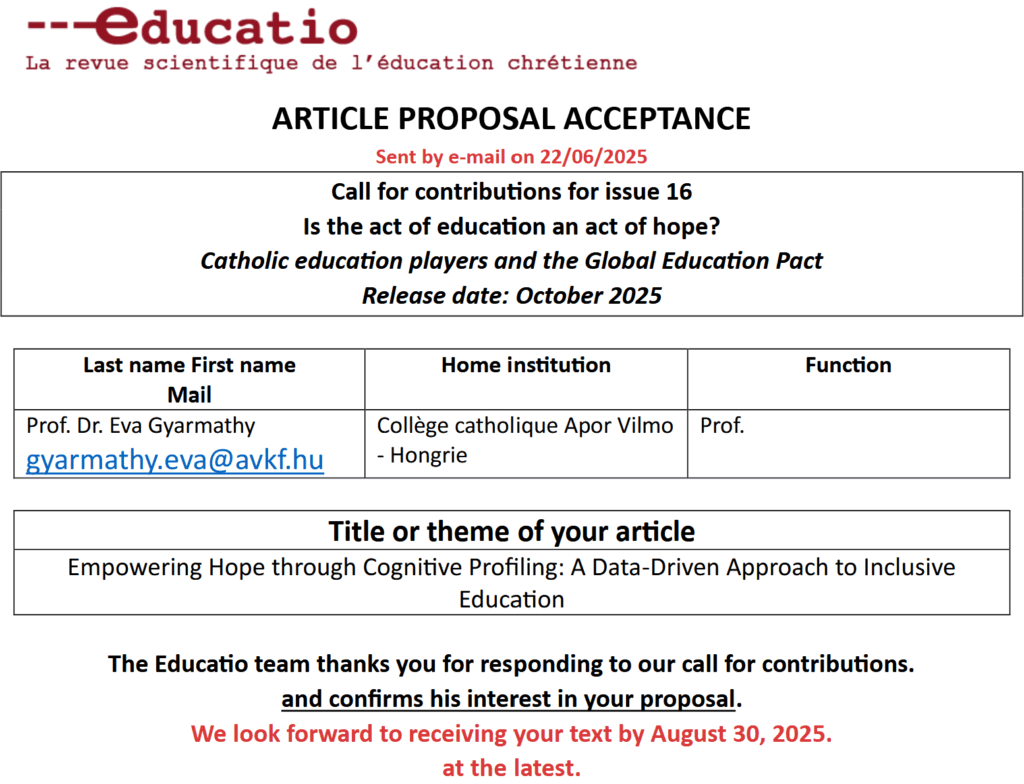
The international online research journal Educatio, focused on Christian education, in collaboration with the research sector of the International Federation of Catholic Universities (IFCU), has issued a call for contributions under the theme: “Is Education an Act of Hope? Catholic Education Stakeholders and the Global Compact on Education.”

“In a world shaken by multiple crises – social, environmental, economic, and spiritual – can education still offer hope? With Pope Francis’s Global Compact on Education as its backdrop, the 16th issue of Educatio invites scholars to explore how Catholic educational institutions at the primary, secondary, and higher education levels are responding to this call.”

We responded to this call and were given the opportunity to publish our research.

Extensive testing of the flashcards

One digital solution for methodological development is the use of flashcards in board games in class. We have further developed a tried and tested method and started testing the cards on a wider scale.

You can sign up to try the method with Dr. Bertalan Forstner at: Forstner.Bertalan@aut.bme.hu